Quick Feng Shui Guide
What to Know First
Older generations often say that planting trees in the yard is not only about creating shade and keeping the home cool. It is also a way of bringing good wishes and positive meaning into the family.
The osmanthus tree comes first because it represents honor and success.
Best moves
The jujube tree is also strong and easy to grow. Because it produces fruit year after year, it reminds people that if a family stays hardworking, patient, and practical, good results will naturally come with time.
Watch out
For ancient Chinese families, planting these three trees was never just about planting trees. It was about planting hopes - hopes for a prosperous family, successful children, and a better life that continues to grow.
More Feng Shui Notes
In Chinese, the word for osmanthus sounds like the word for "noble" or "honored." Since ancient times, people have used the phrase "winning the osmanthus crown" as a symbol of achievement, especially wishing children success in their studies and hoping the family will raise talented and accomplished people.
When the osmanthus flowers bloom in autumn, the sweet fragrance fills the whole yard, making the home feel even more blessed and joyful.
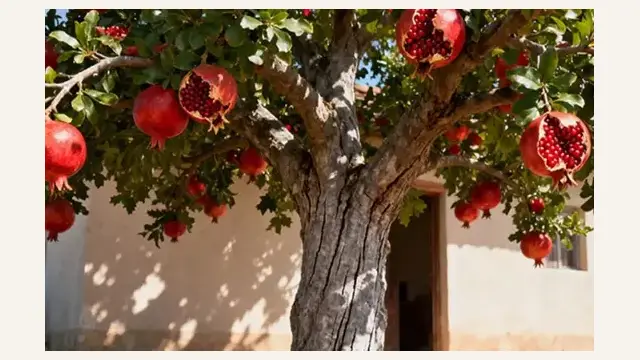
The pomegranate tree represents prosperity and a thriving family.
A single pomegranate is filled with many seeds, so people traditionally see it as a symbol of abundance, many blessings, and a growing family.
Its bright red flowers bring a feeling of warmth and energy, while its round, full fruits represent harmony, happiness, and the hope for a prosperous life.
The jujube tree carries a more simple and down-to-earth meaning.
In Chinese, the word for jujube sounds like the word for "early." In traditional wedding customs, jujubes were often paired with other symbolic foods to express wishes for an early family blessing and happiness.
The osmanthus tree represents ambition and growth.
The pomegranate tree represents harmony and prosperity.
The jujube tree represents hard work and perseverance.
